

Convrt helps B2B sales teams identify buying intent across social networks. The core experience, Cues, surfaces high-intent conversations and uses AI to suggest how to respond. The AI was powerful, but users struggled to understand it, trust it, or act on it.
The core product surfaced high-intent signals, but the experience struggled
- Cognitive overload from dense, content-heavy screens
- Unclear hierarchy and navigation
- Too many competing CTAs
- AI suggestions lacked transparency and feedback
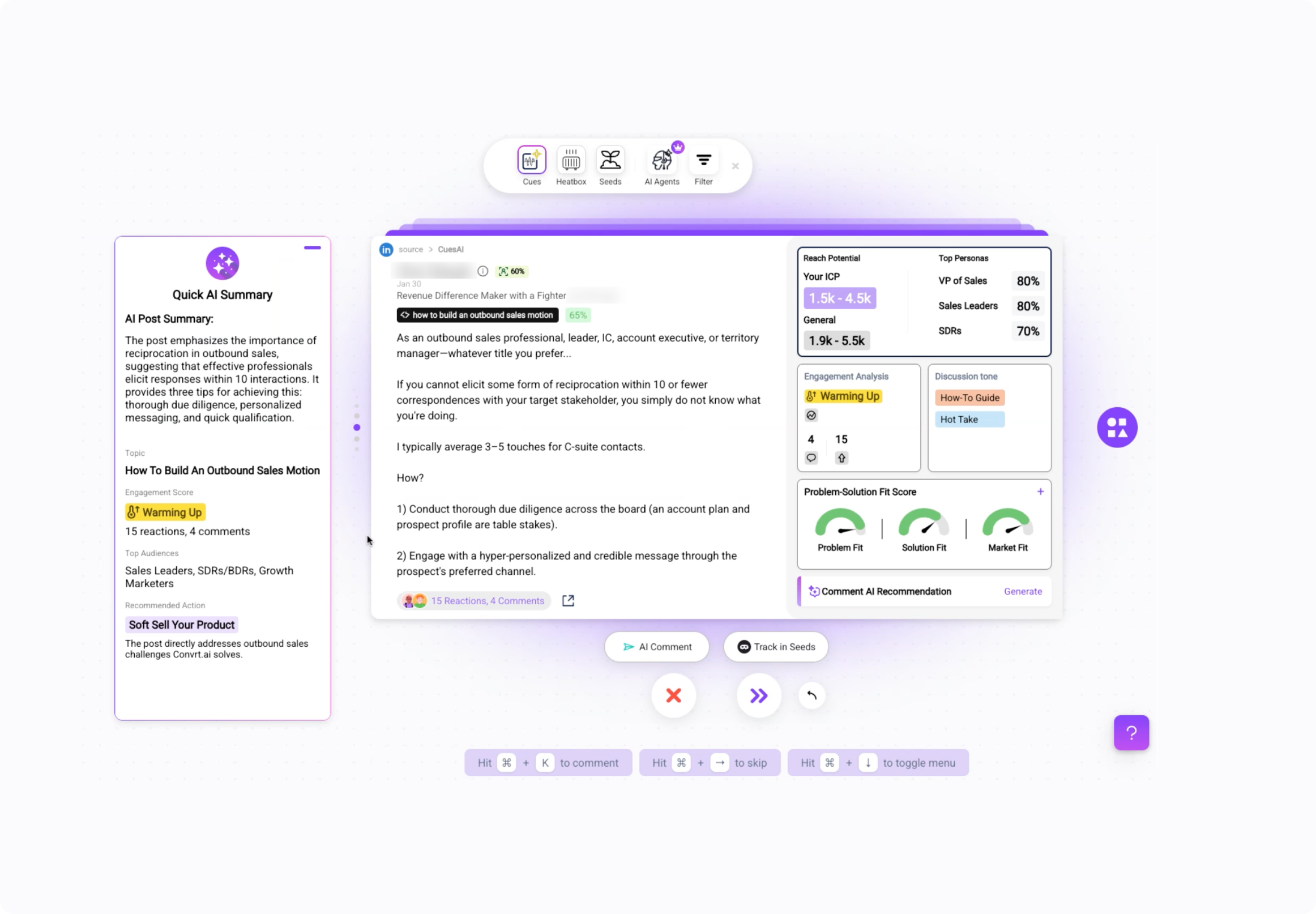
Before: dense screens and unclear hierarchy
Cues was one step in a larger AI workflow
The product used AI at multiple touchpoints: surfacing signals, scoring intent, recommending responses, and grading outreach quality. Designing Cues meant designing one node in a larger chain, and I mapped the full workflow to avoid creating trust gaps further down.
- AI scored leads, suggested responses, and graded message quality across the pipeline
- Each touchpoint required different interaction patterns: browse, act, evaluate
- Designing in isolation would have created inconsistencies in the later steps of the flow
Mapped the AI logic before designing around it
Before designing feedback or transparency patterns, I worked closely with engineers to understand how the AI actually worked. We traced every output back to its source: what the model evaluated, what data it weighted, and why it ranked things the way it did. Understanding the system prompt and scoring logic let me translate AI behavior into interface patterns that felt honest rather than magical.
- Mapped every AI output: what it represents, where it comes from, how it's calculated
- Reviewed the system prompt and scoring logic with the engineering team
- Used that understanding to write UI copy that reflects real system behavior, not marketing language
Working within the existing design system to validate direction
Making AI behavior understandable and correctable
Feedback mechanisms captured explicit signals (ratings, deletions, edits) and implicit behavior (regeneration, skips, engagement).
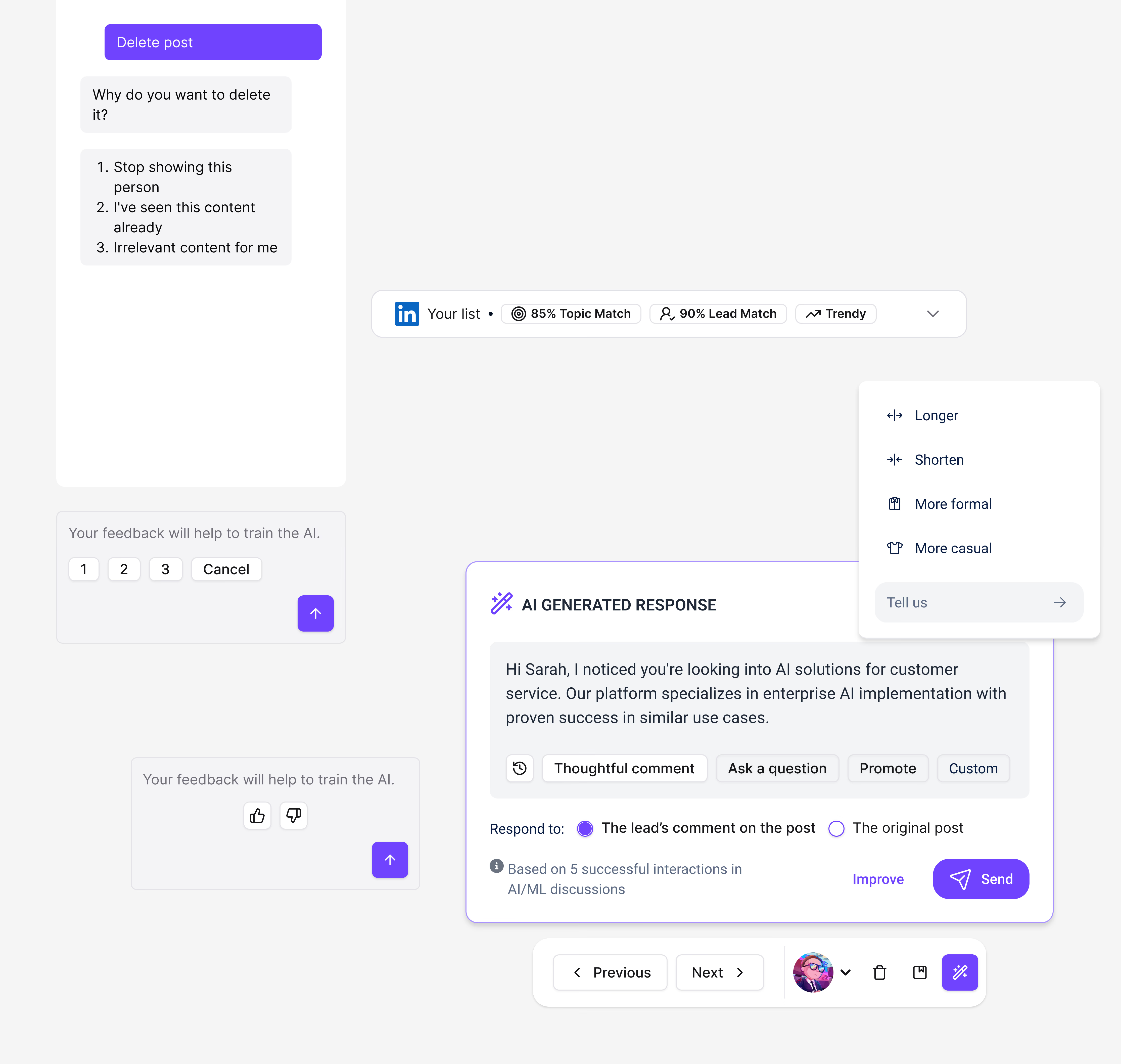
Explicit and Implicit Feedback
Results
- ~25–30% reduction in time-on-task
- Shorter onboarding calls
- Users felt more confident working with the AI