

Plista's Creative Studio helps advertisers create ads for programmatic campaigns. During a platform redesign, research surfaced a consistent friction point: users got stuck at the creative step. Given the pressure to release, we couldn't expand scope at the time but it didn't make sense to ignore the growing gap in creative support.
Users got stuck at the creative step, and solved it outside plista
The insight came from redesign research. When users reached the creative part, they froze. Writing a headline, picking an image, deciding on copy. None of it felt obvious.
- Users didn't know what would perform well, so they second-guessed every choice
- Many were already using ChatGPT or other AI tools externally, then copying results back in
- That context switching made the creative step feel slow and disconnected from the rest of the flow
- The AI that could help was either absent from the workflow or invisible to the user
Four AI features wired directly into the creative workflow
- Brand extraction: URL-scraped logos, colors, and content pre-populate the creative
- Delightful onboarding: Users see a ready-to-use native ad based on their brand at setup
- Stock image library: Industry-relevant visuals surfaced automatically
- Copywriting assistant: AI-generated copy tailored to brand identity and target audience
Delightful onboarding: brand-aware ad generated at setup
AI-generated copy tailored to brand identity and audience
The assistant analyzes the advertiser's brand, industry trends, and target audience to generate relevant ad copy. Advertisers can refine it or use it as-is.
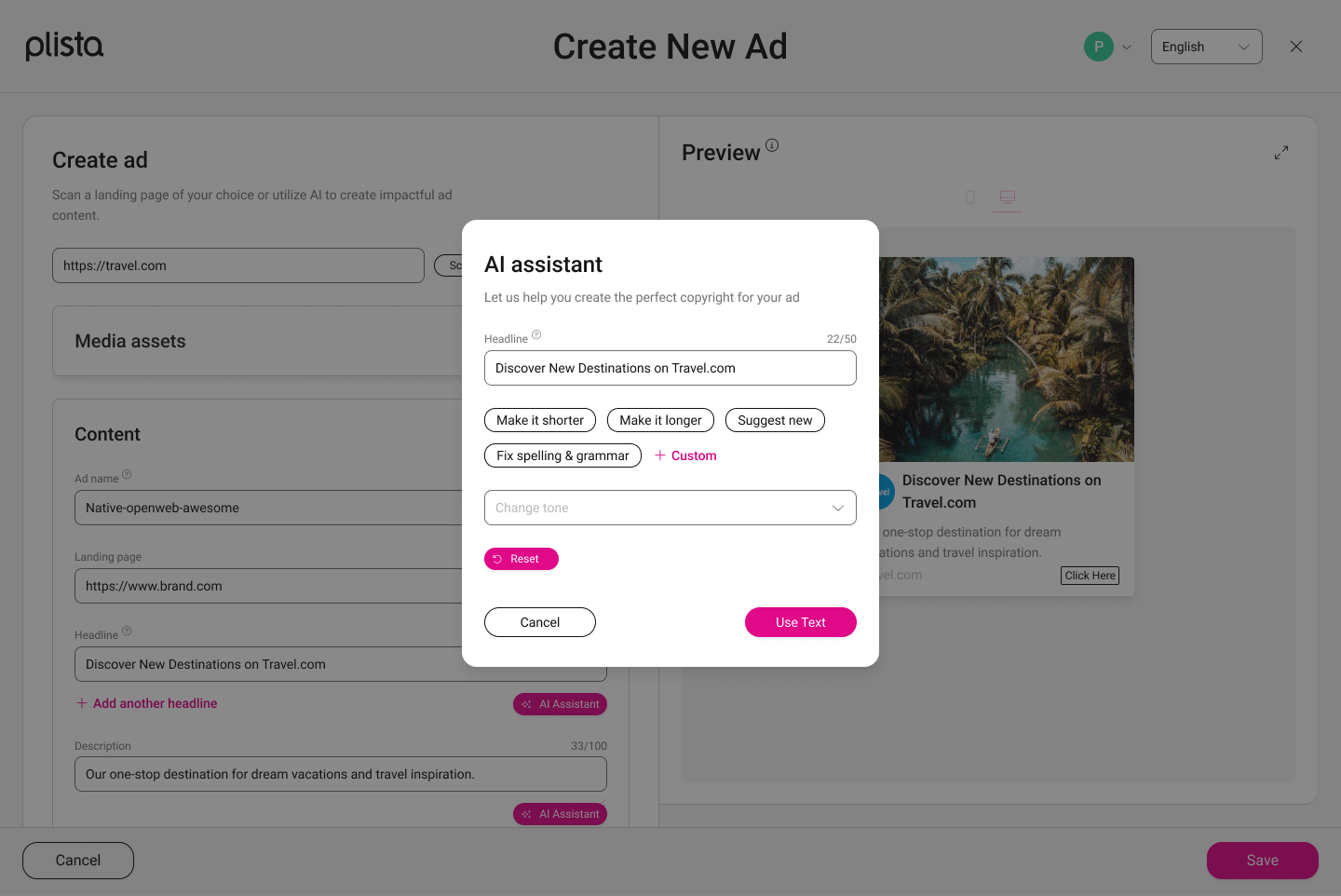
Copywriting assistant: content panel open
Concept testing confirmed the direction
Conducted in-person concept validation with existing and potential advertisers using a Figma prototype and Typeform.
- Strong enthusiasm for AI features, even among users who had never used AI tools
- Identified support gaps around keyword selection and visual curation
- High willingness to participate in further testing
Results
- Validated approach with existing and potential advertisers
- Users engaged with AI features, including those who previously avoided AI tools
- Confirmed concrete product direction: AI support for copy and visual selection